Yes. Cracked, chipped or missing tiles can leave sharp edges and uneven surfaces where people walk and swim, which can cause cuts, grazes and trips. Operators usually assess each defect, protect or close the affected area where needed and arrange a permanent repair. The right response depends on where the tile is and who uses that part of the pool.
Why a broken tile matters
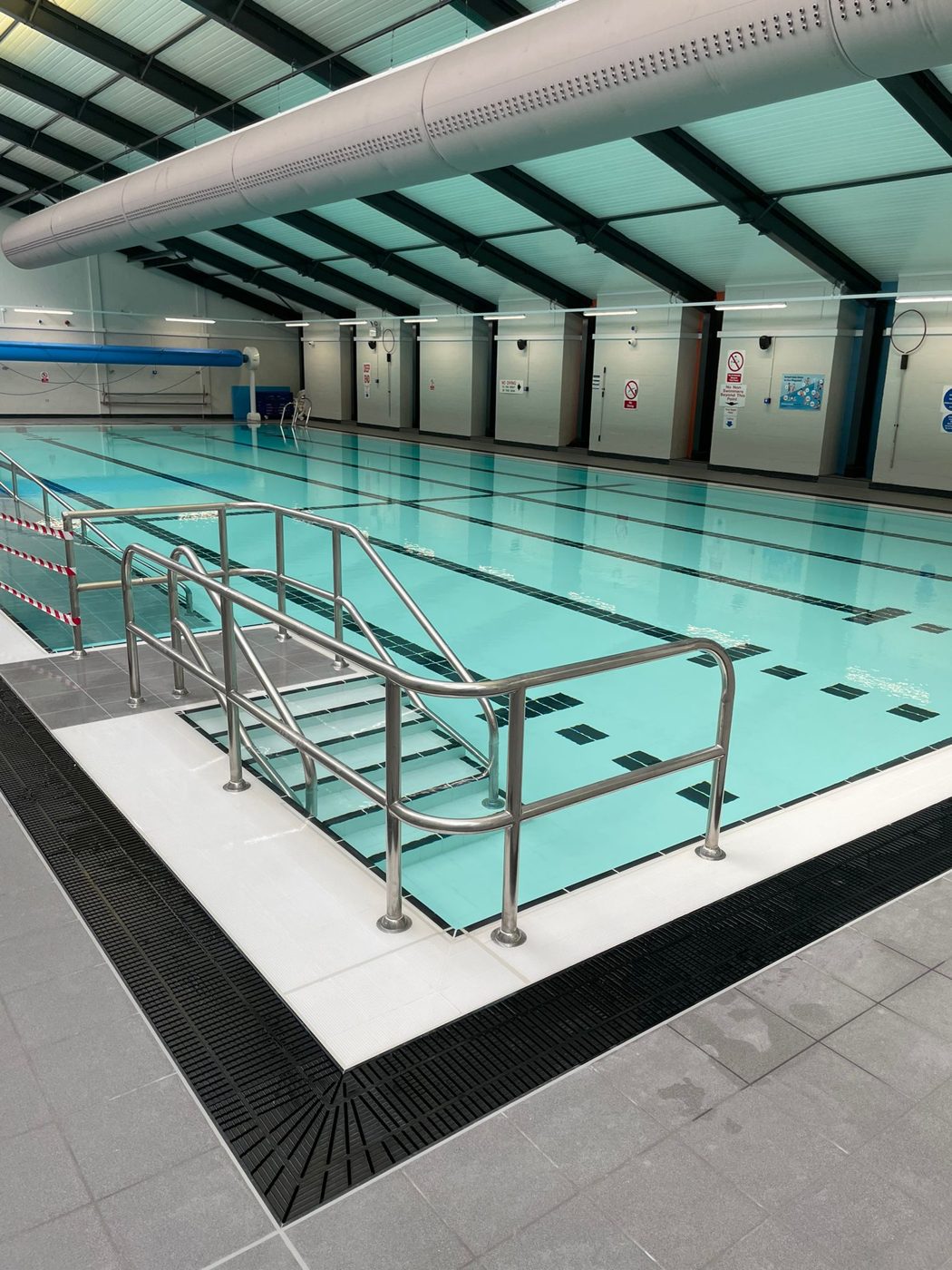
Ceramic and glass tiles are hard and smooth on the face, but a broken edge can be sharp. In a pool, people are barefoot, often moving quickly and not looking down. A chip on a step nosing, a cracked floor tile or a missing tile at the edge of a channel can catch feet, hands and knees.
Broken tiles also let water reach the bedding beneath. Over time that can loosen neighbouring tiles, so a small defect left in place can grow. Caught early, the repair usually stays small.
Where the risk tends to be highest
Some areas see more contact and more barefoot traffic than others. Check these first.
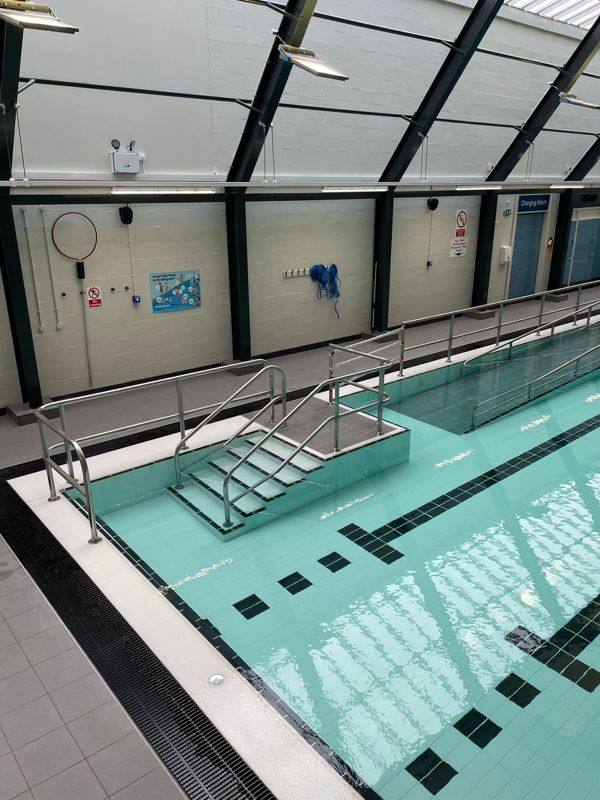
- Step treads, nosings and the edges of entry steps
- The pool edge, coping and overflow channels
- Shallow water and learner pool floors, where people stand and kneel
- Around handrails, ladders and grilles
- Poolside walkways and the routes to changing rooms
- Spa seating and benches
Common causes
Tiles can crack because of impact, such as dropped equipment, or because of what is happening beneath them. Voids in the bedding, movement in the structure, failed or missing movement joints and loss of bond can all lead to cracking. Our guides on cracked pool tiles and why pool tiles come loose explain these causes in more detail.
The cause matters because it decides the repair. Replacing a cracked tile without dealing with a void or a blocked movement joint may simply lead to another crack nearby.
Temporary measures
When a broken tile is found while the pool is open, the operator decides what to do in the short term, based on their risk assessment and the advice of their team. Temporary measures are about keeping people away from the hazard until it can be fixed properly.
- Cone or rope off the affected area of poolside
- Close a lane, a step or a section of shallow water where that is practical
- Inform lifeguards, teachers and duty staff
- Recover loose tile fragments from the water and poolside
- Record the location and photograph it for the repair contractor
- Avoid improvised fillers or tapes in the water unless the product is known to be suitable
When to close an area or the pool
There is no fixed rule. Operators usually weigh up how sharp or exposed the defect is, whether people can be kept away from it reliably and who uses that part of the pool. A cracked tile in deep water away from walls may be treated differently from a sharp edge on a learner pool step.
If a defect cannot be isolated, or if several tiles have failed together, a wider closure may be the sensible choice. Our guide on when to close a pool for repairs covers that decision in more detail. The operator makes the call; a contractor can help by explaining what the repair involves.
How permanent repairs are done
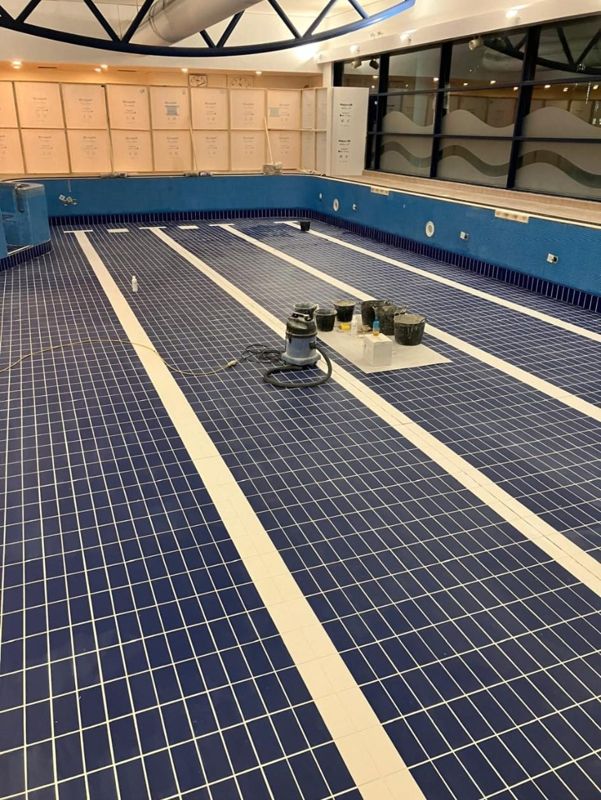
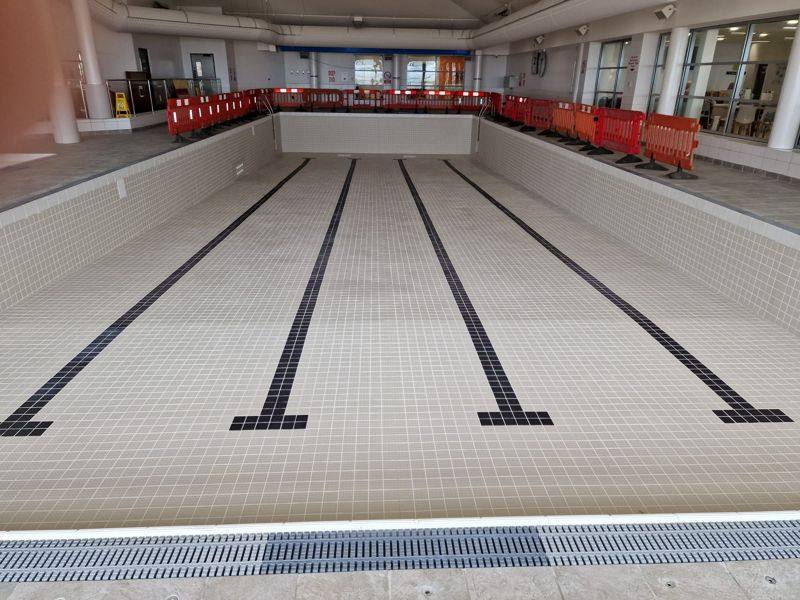
Many tile repairs need the water level lowered or the pool drained so the area can be dried, prepared and left to cure. Dan and Jay cut out the failed tile and its grout, protect the tiles around it and take out weak or contaminated bedding. How far the repair goes depends on what they find once the tile is up, not on a guess made beforehand.
Replacement tiles, bedding and joint materials are selected for the location and pool conditions. Any movement or perimeter joint in the repair area goes back in flexible sealant. The pool is not refilled until the products have had the cure time their instructions call for.
Recording and reporting
Every broken tile is worth recording, even if it is repaired quickly. A simple defects log with the date, location, a photo and the action taken helps operators see whether problems are clustering in one area, which can point to an underlying cause such as a void or a blocked movement joint.
If someone is injured, the operator should follow their own incident procedures. Some injuries may need to be reported to HSE under RIDDOR, depending on what happened and to whom, so operators should check HSE's guidance rather than assume.
Looking for problems before they break
Regular visual checks of steps, edges and floors pick up most defects early. When the pool is drained, a tap test can help screen for hollow-sounding areas that may indicate voids or loss of bond. A hollow note is a pointer rather than proof, and where the result is unclear a tile may need lifting to confirm.
We look at the pool first, explain the options and agree the scope before any tile comes out.
Common questions
Can one broken tile be replaced on its own?
Often, yes, when the surrounding tiles and substrate are sound. If the bedding beneath is weak or neighbouring tiles are hollow, the repair area may need to be larger. That is found when the tile is lifted.
Can a tile be repaired without draining the pool?
Some small repairs above the waterline can be done with the level lowered. Most underwater repairs need the area drained and dried so materials can bond and cure as the manufacturer intends.
Who decides whether the pool stays open?
The pool operator, based on their risk assessment. We can describe the defect and the repair, but the decision about opening or closing belongs to the operator.
Can we glue a broken tile back in place ourselves?
We would not recommend improvised repairs in or around pool water. Adhesives and fillers not designed for immersion may fail, release into the water or hide a problem beneath. A temporary closure of the area and a proper repair is usually the safer route.
Sources and further guidance
This guide is general information, not legal, health or safety advice for a specific site. Pool operators should follow current official guidance and take advice from competent specialists.