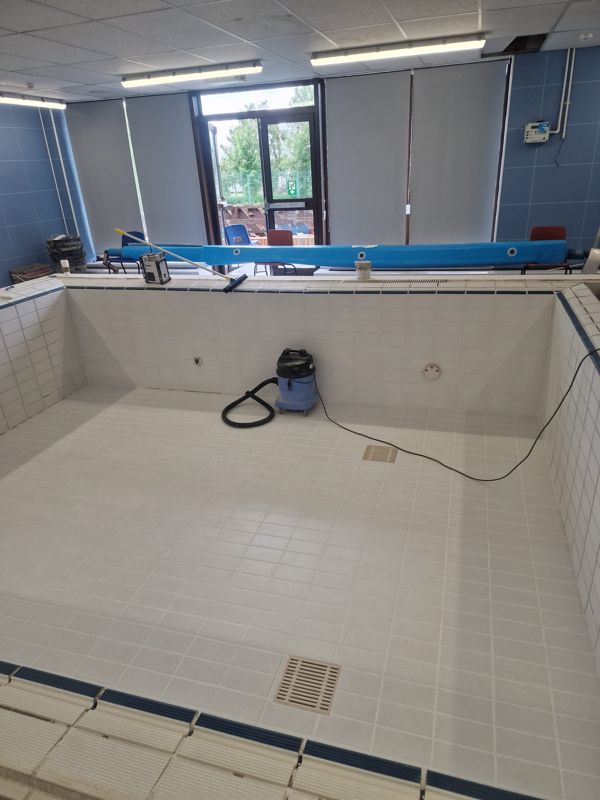
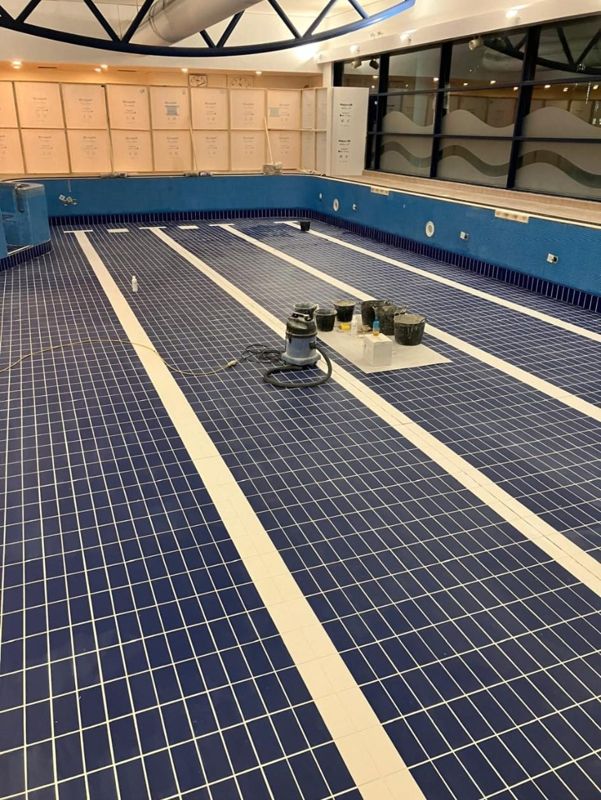
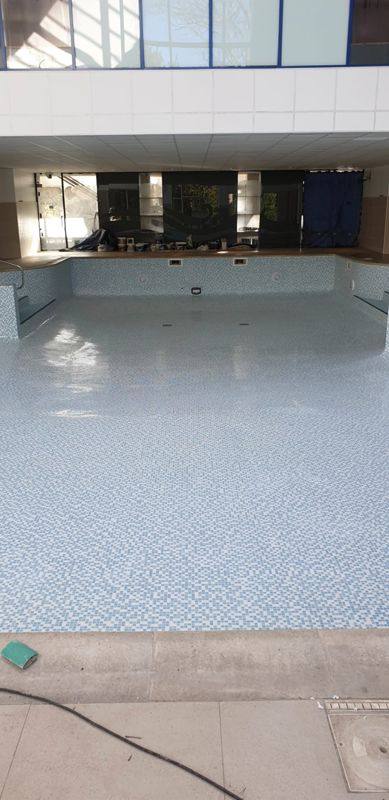
In most cases, no. A proper regrout needs the old grout raked out, the joints cleaned and dry enough for the product, and the new grout cured before immersion, which means draining the pool. Lowering the water can allow some work near the waterline, and underwater repair products can patch small areas temporarily, but neither replaces a full regrout.
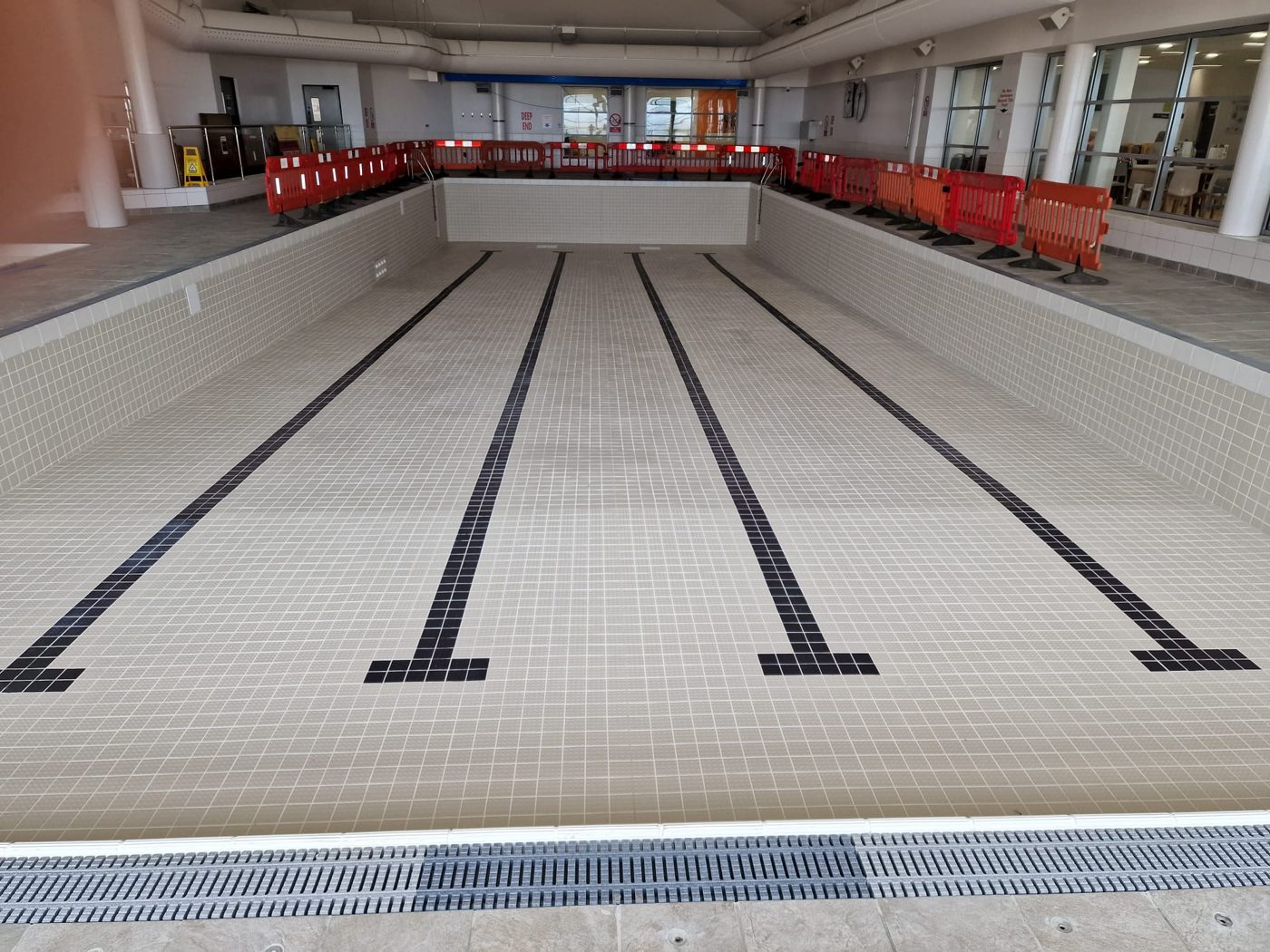
Why draining is usually necessary
Regrouting is not just pressing new material into gaps. Old grout has to be removed to an adequate depth, the joints cleaned of dust and debris, and the new grout worked in fully and finished to the tile face. Then it must cure as its manufacturer requires before it is immersed and exposed to treated water.
None of that can be done properly underwater. Pool grouts, epoxy included, are made to be applied out of the water and to cure before they are immersed.
Water also gets in the way of seeing the work. Checking that each joint is fully filled, compacted and cleanly finished to the tile face is a close visual job, and it is far easier to get right in a dry, well-lit pool.
Inspection needs a drained pool too
A drained pool also allows the tiles to be checked properly. Tap testing for hollow areas, looking closely at cracked or loose tiles and checking movement joints are all part of deciding whether regrouting is even the right job.
Regrouting over tiles that have lost their bond can hide a problem for a while without fixing it. Draining gives the chance to find those areas first.
It is also the only practical moment to see the whole surface at once. Patterns of grout loss, cracking and staining that are hard to spot through water become much clearer when the pool is empty and clean.
What partial draining can allow
For grout or tile problems in a band near the waterline, it is sometimes possible to lower the water level rather than empty the pool. That can allow work on the upper wall, edge tiles or channel areas while the deeper parts stay full.
This needs careful thought. The working area still has to be dry enough for the product, protected from splashes and condensation, and given its full cure before the water is raised again. Water treatment and circulation also need managing while the level is down.
Underwater repair products
Some products are sold for underwater use, typically for re-fixing an individual tile or filling a small area of joint. They can be a reasonable short-term measure for a hazard, such as a sharp edge on a step, until the pool is next drained.
They are not a substitute for a regrout. They do not allow the joint or bed to be inspected or prepared properly, and their performance depends heavily on the product, the conditions and the application. Any such product should be used strictly to its manufacturer's instructions and only where it is suitable for pool water.
Reasons owners hope to avoid draining
The reluctance is understandable, and the usual worries are these.
- Lost bookings, lessons and memberships during the closure.
- The cost and time of refilling, heating and rebalancing the water.
- Concerns about groundwater or the structure when the pool is empty.
- Disruption to other parts of the venue.
Planning a drain-down well
Most of these are better handled by planning the drain-down than by avoiding it. Doing plant or lighting work in the same closure makes better use of the time, and a quieter period of the year softens the effect on users.
If there is any doubt about whether the pool can be safely emptied, for example because of high groundwater, the pool's designer, a structural engineer or the original installer's guidance should be consulted before draining. Some pools have specific drain and refill instructions that need following.
Small problems while you wait
If you notice grout loss or a loose tile but cannot drain soon, record it with photographs and a note of its position. Keep an eye on whether it spreads and consider whether the area poses a risk to bathers.
When the pool is next drained, that record helps focus the inspection and the work. We can review photos in advance and help plan what is likely to be needed, while being clear that the final scope depends on what is found.
Common questions
Is underwater grout as good as normal grout?
Products sold for underwater use are generally intended for small local repairs. They do not allow full joint preparation or inspection, so they are not usually a long-term alternative to a regrout in a drained pool.
Can a diver regrout a pool?
Divers can carry out some underwater inspections and small repairs. Full regrouting needs joints raked out, cleaned and dry enough for the product, followed by a proper cure, which is not practical underwater.
Does draining a pool risk damaging it?
Most pools are designed to be drained for maintenance, but some sites have high groundwater or specific instructions. Where there is any doubt, check the pool's documentation or take advice from its designer or a structural engineer before draining.
How low does the water need to go for waterline repairs?
Low enough to leave a safe margin below the work area so it stays dry and protected throughout application and cure. The exact level depends on the area being repaired and the product used.