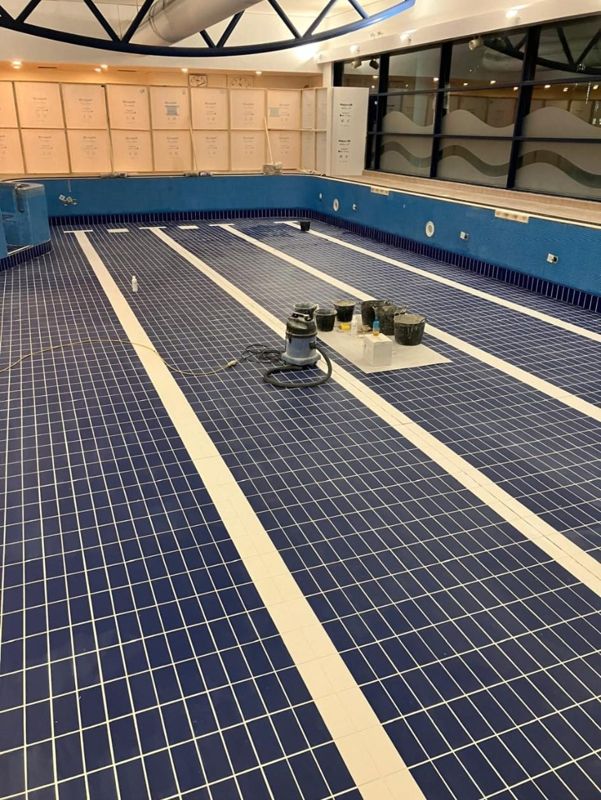
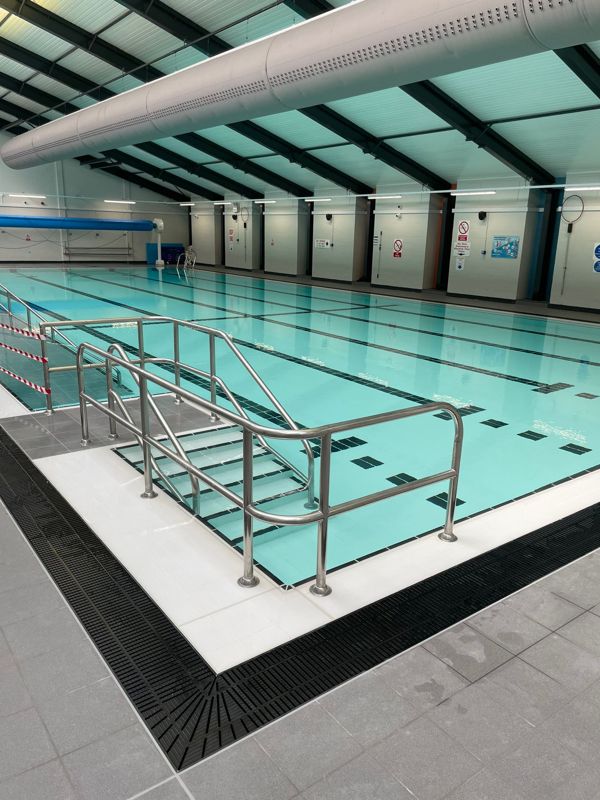
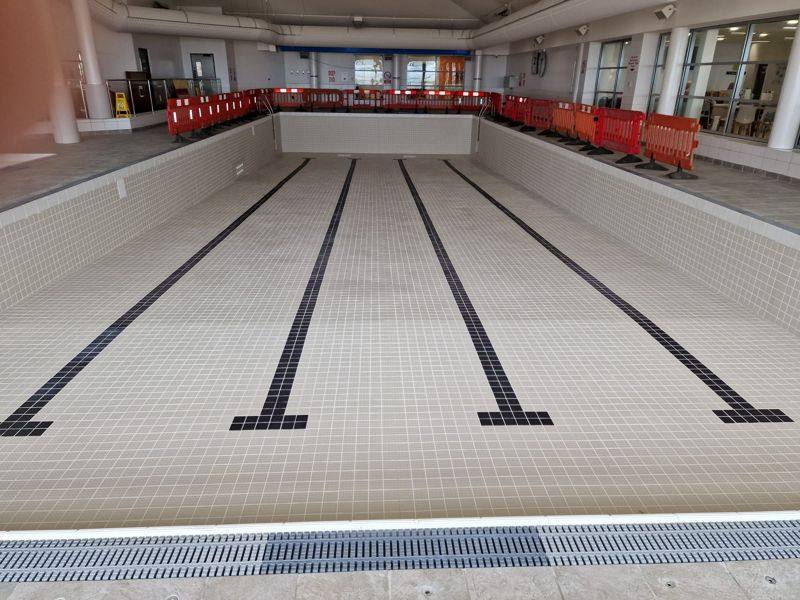
A pool usually closes for repairs when a defect cannot be safely isolated, when repairs need the water level lowered or the pool drained, or when the operator's specialists advise it. Many tile problems can be managed with a partial closure and planned for the next drain down. The decision belongs to the operator, based on their risk assessment and specialist advice.
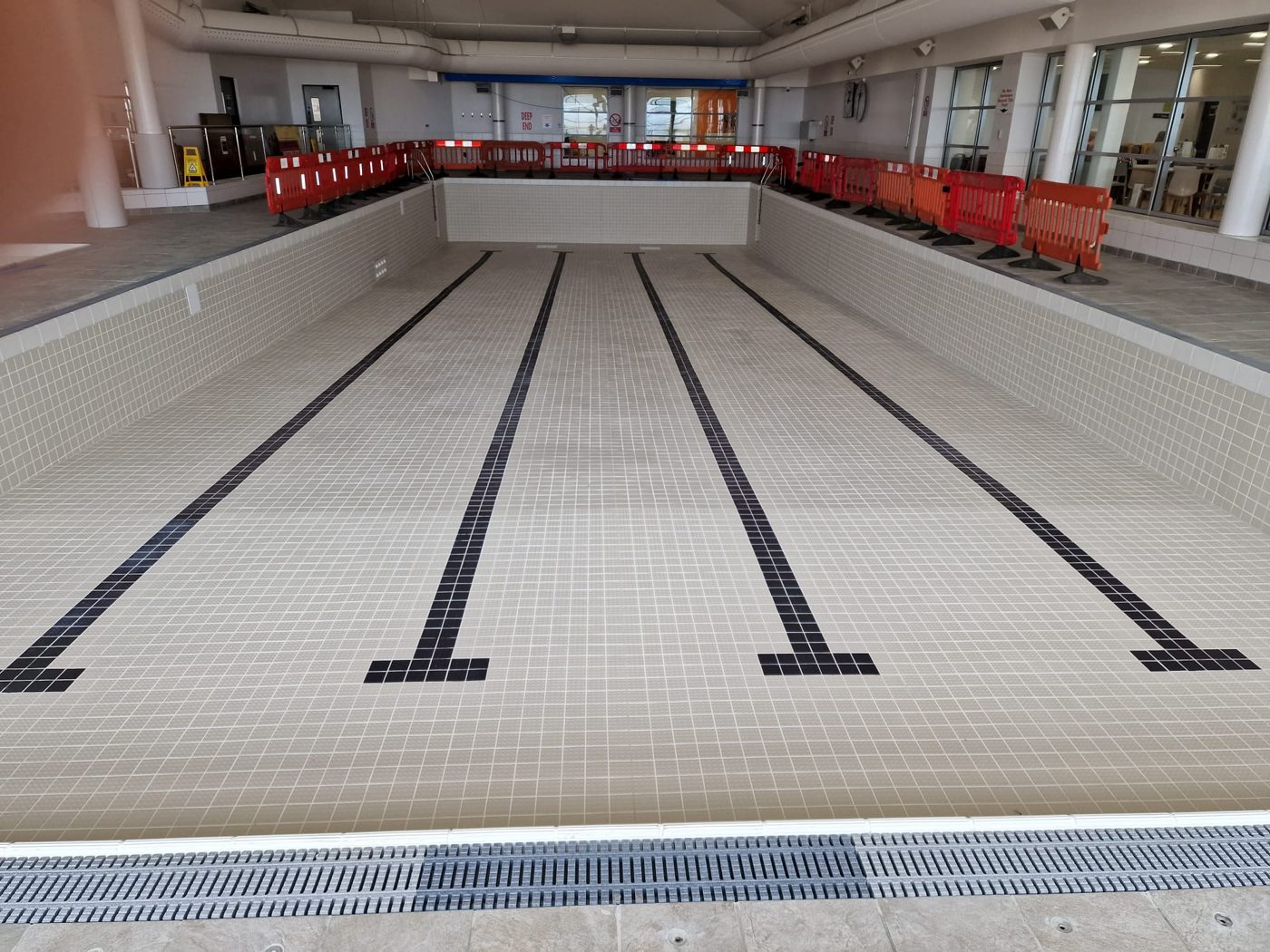
There is no single rule
There is no checklist that turns a given defect into an automatic closure. Operators weigh the hazard, who is exposed to it, whether it can be controlled and what the repair involves. A sharp edge in a learner pool used by young children may be treated differently from a hairline crack in deep water.
HSG179, Health and safety in swimming pools, covers the measures operators can take to reduce risks and comply with the law. HSE's general approach of identifying hazards, assessing and controlling the risks, recording findings and reviewing the controls applies to tile defects as much as anything else. Take advice where you are unsure.
Common triggers for closing
These are situations where closing all or part of a pool is often considered. They are examples to discuss with your team and specialists, not fixed thresholds.
- Sharp, broken or missing tiles that cannot be kept away from users
- Several tiles lifting or debonding in the same area
- Damage to steps or edges used for entry and exit
- Water quality concerns raised by the water treatment specialist
- Plant, filtration or ventilation faults identified by engineers
- Repairs that need the pool drained or the level lowered
Who is involved in the decision
Operators rarely make this call alone. The duty manager, the health and safety adviser, the water treatment specialist and the repair contractor may each have a view. Agreeing in advance who is consulted and who has the final say avoids delays when a defect is found during a busy session.
Partial closures
Many tile defects can be managed without closing the whole pool. Roping off a section of poolside, closing a lane or a set of steps, or restricting use of a learner pool can keep the rest of the facility open while a repair is arranged.
Partial closures work when the hazard can be reliably isolated and staff can supervise the arrangement. If people are likely to stray into the area, or the defect is in water that cannot be separated, a wider closure may be safer.
Monitor, plan or act now
Not every defect needs immediate closure. Hollow-sounding tiles that are still flat and intact, small areas of eroded grout or minor staining can often be recorded, monitored and included in the next planned shutdown.
What matters is knowing which defects are stable and which are getting worse. Photographs and a defects log help operators see change over time and decide when a planned repair should become an urgent one.
Why repairs often need the pool drained
Most underwater tile repairs and regrouting need the area dry. Adhesives, grouts and repair products are designed to bond and cure in particular conditions, and refilling too soon can compromise the repair. So the programme has to carry the full cure time before refill.
Some repairs above the waterline can be done with the water level lowered. Whether that is possible depends on the location, the products and the operator's arrangements for the plant and water.
Reducing the length of a closure
Closure days matter to operators, members and lesson programmes. Planning makes the biggest difference to how long a pool is out of use. We confirm the scope, materials, access and working areas in advance, coordinate with the operator and flag hidden defects or programme risks promptly.
- Share photos and the defects log before the closure
- Book contractors and specialists early
- Agree a sequence for draining, cleaning, repairs and refill
- Allow a contingency for defects found once the pool is empty
- Combine planned works into one closure where practical
Communicating with users
Users generally accept closures that are explained clearly. A short notice that says what is being done and why, and when the pool is expected to reopen subject to cure times, helps manage expectations. Our guide on planning a pool closure covers this in more detail.
PoolRevive carries out tile repairs, regrouting and refurbishment across the UK. We explain the options before work begins so the operator can make the decision with clear information.
Common questions
Can you repair a pool tile while the pool is open?
Usually not for underwater tiles. Most repairs need the area dry and time for materials to cure. The operator may be able to close the affected area and keep the rest open until a planned drain down.
Who decides if a pool should close?
The operator, based on their risk assessment and advice from their specialists. We can describe the defect and what the repair involves to help that decision.
Is a hollow-sounding tile a reason to close?
Not on its own. Tapping only screens for voids, and many hollow-sounding tiles are simply recorded and monitored. If tiles are lifting, cracking or have sharp edges, the operator may decide to act sooner.
Can we keep the pool open until the planned shutdown?
Sometimes, if the defect can be isolated or is stable and being monitored. If it is getting worse, cannot be kept away from users or creates a sharp edge, the operator may decide an earlier repair is needed.
Sources and further guidance
This guide is general information, not legal, health or safety advice for a specific site. Pool operators should follow current official guidance and take advice from competent specialists.