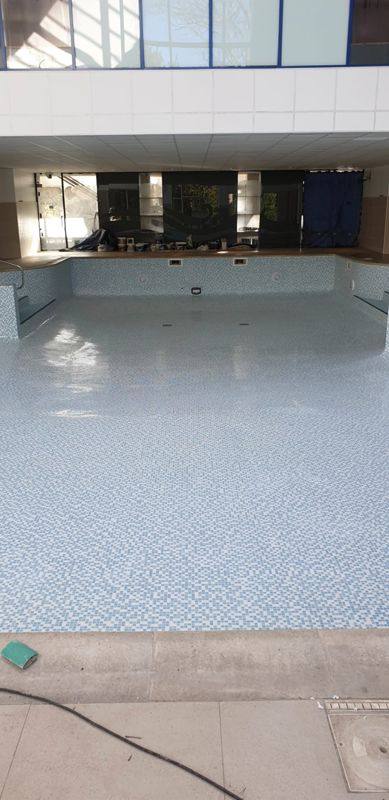
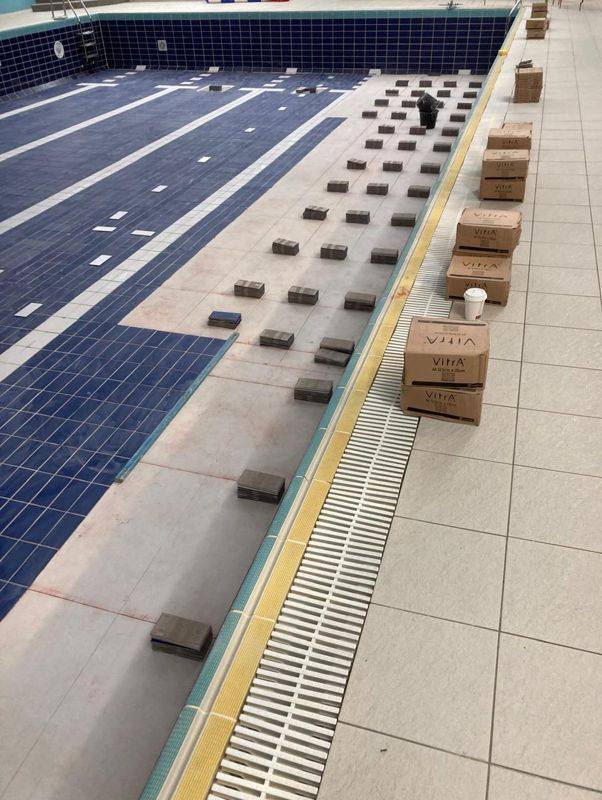
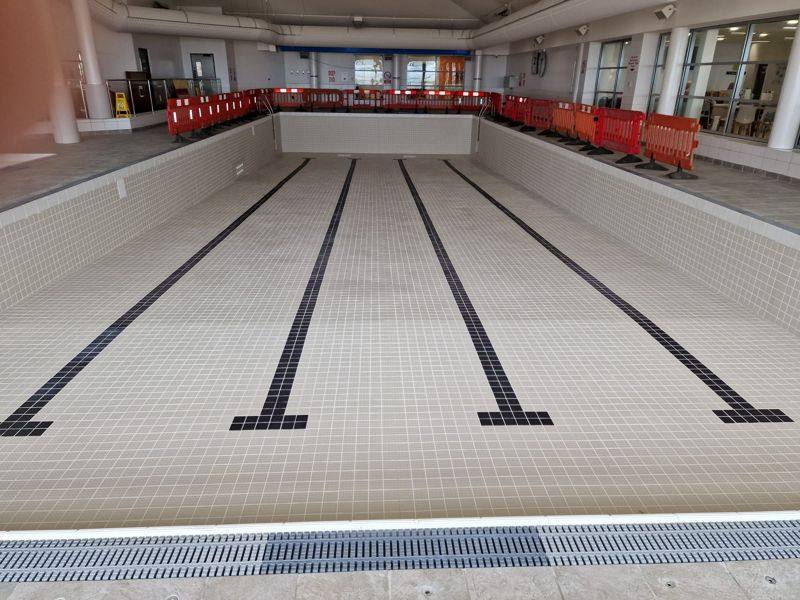
Some water loss is normal through evaporation, splash-out and backwashing. A steady drop beyond that suggests a leak, and in a tiled pool the cause is often in pipework, fittings or the shell rather than the grout. A leak detection specialist should find it first. Tiling repairs come afterwards, once the cause has been fixed.
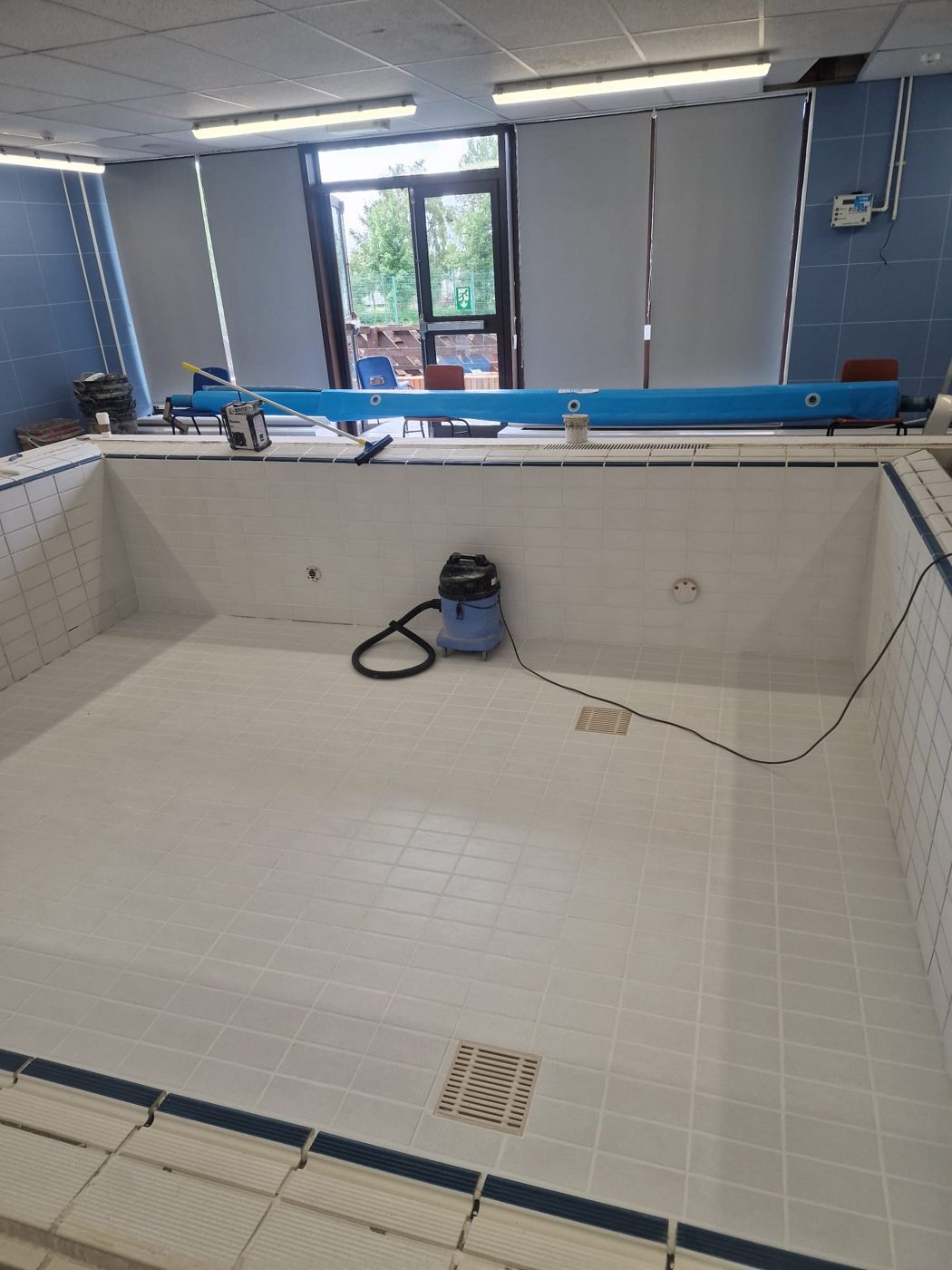
Is it evaporation or a leak?
Every pool loses some water. Evaporation, splash-out, swimmers carrying water out and backwashing the filter all lower the level, and the rate changes with temperature, humidity and how busy the pool is.
A simple way to compare is the bucket test: stand a bucket of pool water on a step in the pool, mark both water levels, and check them a day later with the pump running as normal. If the pool level falls noticeably more than the bucket level, a leak is likely. For a commercial pool, the plant room records and make-up water readings are a better guide.
Why grout is not the waterproof layer
It is natural to look at open joints and assume that is where the water goes. But tiles and grout are a finish. The concrete shell, and in many pools a waterproofing membrane behind the tile bed, are what hold the water in.
Missing grout still matters. It lets water into the tile bed and background, which can loosen tiles over time. But regrouting a pool will not, by itself, cure a leak in the shell, pipework or fittings.
Where pool leaks usually are
- Pipework under or around the pool, including return and suction lines
- Fittings set into the shell: lights, inlets, outlets, skimmers and main drains
- Joints between the pool shell and channels or overflow gutters
- Cracks in the shell itself
- The plant room, including valves and pump seals
Who finds the leak
Leak detection is a specialist trade. Specialists use pressure testing on pipework, dye testing around fittings and other methods to pinpoint where water is escaping, without guesswork.
PoolRevive does not carry out leak detection. If you suspect a leak, we recommend getting it found and repaired first. Structural cracks in the shell need assessing by a structural engineer or pool construction specialist.
Where tiling comes in
Once the cause has been found and fixed, there is often tiling to put right: tiles lifted to reach a fitting, loose or hollow tiles where water has got behind them, joints that have washed out and areas of background that need repairing.
That is our work. We repair or replace the affected tiles, rebuild the background where needed, regrout and renew movement joints, so the pool goes back into use with a sound finish.
Tell us about the tiling repairs
Common questions
Can missing grout cause a pool to leak?
Grout is not the waterproof layer, so missing grout alone rarely explains a leak. It does let water into the tile bed and background, which can loosen tiles and should be put right.
Do you carry out pool leak detection?
No. Leak detection is a specialist trade. We recommend finding and fixing the leak first, then we can repair the tiles, background and joints affected.
Will regrouting stop my pool losing water?
Not if the water is escaping through the shell, pipework or fittings. Regrouting restores the finish and protects the tile bed, but it is not a leak repair.
How much water loss is normal?
It varies with temperature, humidity, use and backwashing, so there is no single figure. If the level drops noticeably faster than a bucket of pool water standing in the pool, have it investigated.
Sources and further guidance
This guide is general information, not legal, health or safety advice for a specific site. Pool operators should follow current official guidance and take advice from competent specialists.