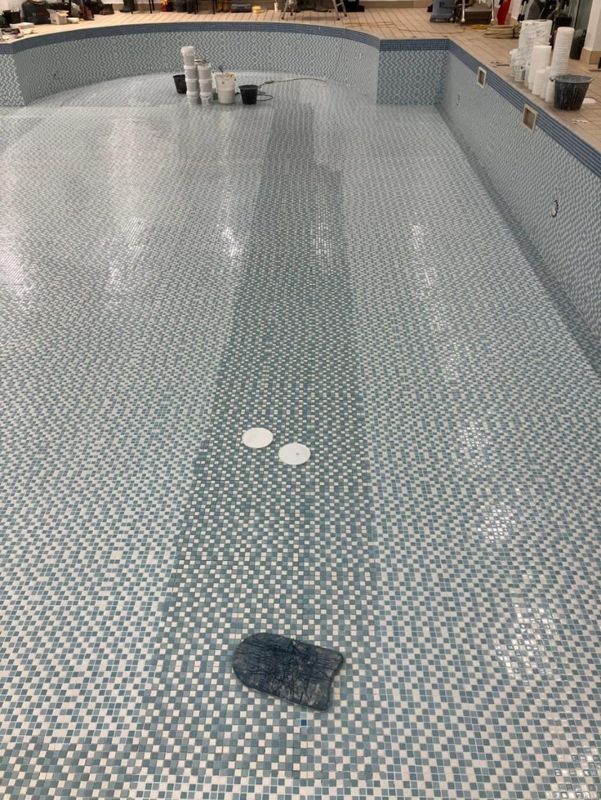
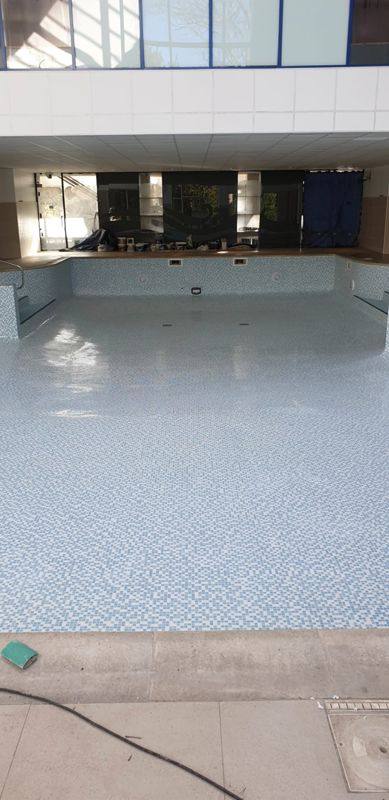
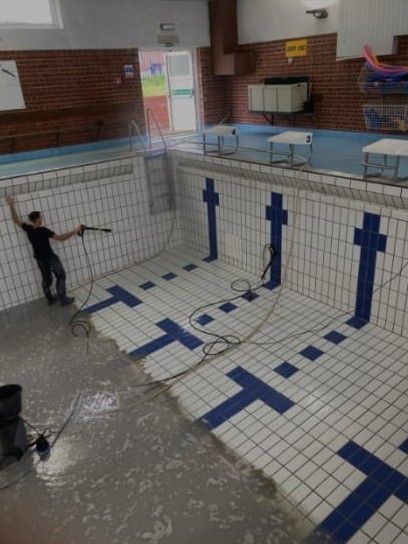
A pool that is not kept clean tends to build up biofilm, scale and dirt on tiles, grout and channels. That can make poolside floors more slippery, give the water treatment more to deal with, look and smell unpleasant to users and, in time, lead to complaints or an unplanned closure. Most of it is preventable with a steady cleaning routine.
Clean water needs clean surfaces
Tile faces, grout joints, channels, grilles and step treads all gather body oils, cosmetics, dirt brought in on feet and fine debris. If that material is left, it gives bacteria and algae somewhere to settle.
PWTAG, the Pool Water Treatment Advisory Group, lists bacterial growth and biofilm among typical pool problems, showing up as a slimy build up on pool walls and the overflow grille. Alongside checking circulation and the chlorination regime, its listed actions include scrubbing the walls. Chemistry is not expected to keep surfaces clean on its own.
What biofilm is
Biofilm is a thin layer of microorganisms bound together in a sticky film. It often shows first as a slippery feel on step treads, in channels or along the waterline, before it is obvious to the eye. Once established it can protect the organisms inside it from the disinfectant in the water, so brushing and scrubbing matter.
Biofilm is not a reason for alarm in a well run pool, but it is a reason to keep cleaning regular and thorough. Open or eroded grout joints, cracked tiles and rough patches give it more places to hold on, so the condition of the finish has a direct effect on how easy the pool is to keep clean.
Slips on dirty poolsides
HSE's floor cleaning guidance says people rarely slip on clean, dry floors and that contamination is involved in almost all slip accidents. A poolside is wet by design, so any extra contamination counts: body oils, soap residue, scale and biofilm can all make a surface feel more slippery than it did when it was new.
The cleaning itself has to be right. HSE points out that detergent concentration is critical and that too strong a solution can be as ineffective as too weak. Products suited to the tile, used at the manufacturer's dilution and rinsed off properly, give the surface its best chance of behaving as designed.
More load on water treatment
Organic dirt that builds up on surfaces and in channels is extra material for the disinfection system to deal with. Operators and their water treatment specialists will notice the effects in their testing and in the air quality of the pool hall. PWTAG's list of typical pool problems links strong chlorinous smells to water treatment and to air handling in the pool hall, and notes that cleaning overflow channels and balance tanks should be part of periodic maintenance.
We do not advise on dosing or water chemistry; that is for the operator's water treatment specialist. From a surfaces point of view, keeping tiles, grout and channels clean removes one source of the problem and makes the specialist's job easier.
What users notice first
Swimmers often notice surface problems before anyone has tested anything. Common comments are about how a pool looks and feels rather than about measured results.
- Dark lines in grout joints or black spots on the floor
- Slimy step treads or handrails
- A scum or tide line at water level
- Debris collecting in channels and around grilles
- Chipped or missing tiles
- Unpleasant smells in the pool hall or changing rooms
When neglect leads to closure
Poor cleaning rarely closes a pool overnight. It builds up: grout erodes faster because it is not looked after, tiles loosen where water gets behind failed joints, and an operator ends up closing for repairs that might have been smaller if they had been caught earlier.
Sometimes a water quality problem means the operator closes the pool on the advice of their specialist. Surface condition can be part of the follow up, because a thorough clean of tiles, joints and channels is often needed before the pool goes back into use.
Practical steps that keep surfaces under control
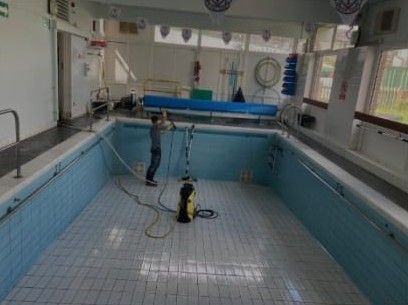
Steady routine cleaning does more than the occasional blitz. When the pool is drained, add a deeper clean and a proper look at the tiles and grout to the shutdown.
PoolRevive cleans tiled pools, repairs damaged tiles and regrouts failed joints. We work out what the soiling is, try a small test patch and use compatible products to the manufacturers' instructions, so the clean does not damage the finish.
- Agree a written cleaning schedule for poolside, steps, channels and changing areas
- Record problem areas so they can be dealt with at the next drain down
- Report damaged tiles and open grout joints promptly
- Keep cleaning products and methods compatible with the tile and grout
- Ask your water treatment specialist about any water quality concerns
Common questions
Is a dirty pool dangerous to swim in?
That depends on the water quality, which is for the operator and their water treatment specialist to judge from their testing. Dirty surfaces add to the load on the water treatment and can make floors slippery, so they should be dealt with promptly. If you have concerns about your own health, speak to a medical professional.
Can cleaning alone fix black grout?
Sometimes. Surface staining and algae can often be cleaned off. If the grout is eroded, cracked or missing, cleaning will not restore it and regrouting may be the better option once the cause is understood.
How do we know if surfaces are the problem?
A visual inspection, ideally when the pool is drained, usually shows whether grout, tiles and channels are clean and intact. We can look at the finish and explain what we find.
Who is responsible for keeping a pool clean?
The pool operator. Day to day cleaning is usually done by the operator's own staff, with water treatment managed by a specialist and deeper cleaning, repairs and regrouting carried out by contractors when the pool is drained.
Sources and further guidance
- PWTAG: Typical pool problems
- HSE: Slips and trips, the importance of floor cleaning
- HSE: HSG179 Health and safety in swimming pools
This guide is general information, not legal, health or safety advice for a specific site. Pool operators should follow current official guidance and take advice from competent specialists.